Herbal Nervines for Chaotic Times
Many of us are very aware that we are in the midst of nearly constant change and upheaval in our world at present.
Although we (humans, animals, plants, et al) are not strangers to turmoil and chaos, the speed at which we take in a whirlwind of information, on top of our many daily responsibilities (that capitalism mostly thrusts upon us, btw), can cause a wide range of reactions in our bodies due to stress & anxiety:
insomnia, digestive woes, tightness & pain in our muscles, circular thinking, detachment, heart palpitations, headaches, & more.
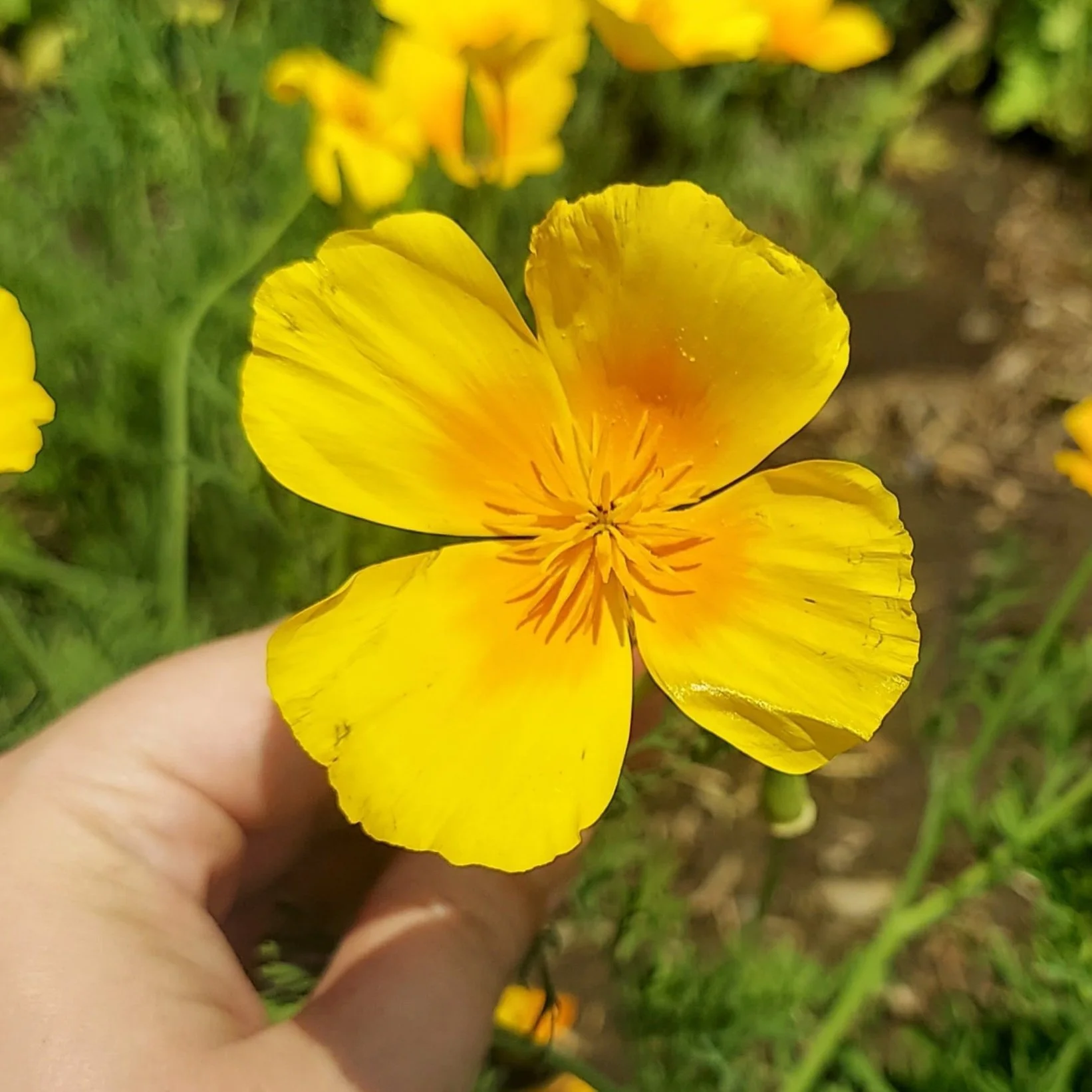
(pictured: California poppy, Foxtrot Farm)
When we are under stress, our sympathetic nervous system is activated, which causes our “fight or flight (or freeze or fawn)” to kick into high gear. This response certainly can be beneficial to us when we really need it (i.e. the classic “being chased by a bear” example), yet when it is being triggered in our every-day lives, we can easily become chronically anxious, fatigued, exhausted, and dysregulated. Since our nervous system is so intricately connected to every process in our bodies, chronic “fight or flight” can interrupt a number of our vital processes, such as sleep, cognition, energy levels, digestion, heart & blood pressure, muscle & nerve function and more.
To show up & be there for each other right now, we also need to be able to show up & be there for ourselves. But how can we do that when we already feel so overloaded and overwhelmed?
Enter the herbal nervines!
Plants can be particularly amazing at taking care of us. While they may not be able to make all of our problems disappear, they can take our stress levels down several notches. Then, we can feel more prepared and aligned with the ability and resilience we need to face the every-day big and little things that can trigger our nerves into a state of overwhelm.

In simple terms, an herbal nervine is a plant that has an effect on the nervous system—these effects can be relaxing, restorative, hypnotic, or even stimulating.
Nervines are an immensely beneficial herbal medicine to have on hand and in your medicine cabinet. Relaxant or sedating nervines can bring an overall sense of ease and calm to the mind, body, and spirit. They can help ease insomnia or frequent wakefulness caused by chronic stress and anxiety. There are also other actions that come into play in many of these nervines, for instance: Bitter nervines, such as Blue Vervain and Motherwort, help to ease digestive woes that are frequently exacerbated by stress.
(pictured: Rosa rugosa on the RI coast)
Antispasmodic and anodyne nervines, such as California Poppy and Skullcap, help to relieve physical pain such as tense muscles and headaches. Restorative nervines help to (you guessed it) restore and tone the nervous system with prolonged use, such as Milky Oats and Skullcap.
Some common and beloved relaxant nervines include: Lemon Balm, Passionflower, Skullcap, Blue Vervain, Rose, Tulsi, Milky Oats, Chamomile, Motherwort, California Poppy, Valerian.
Here is some more information about a few great herbal nervines to start with, and also some of my most beloved:
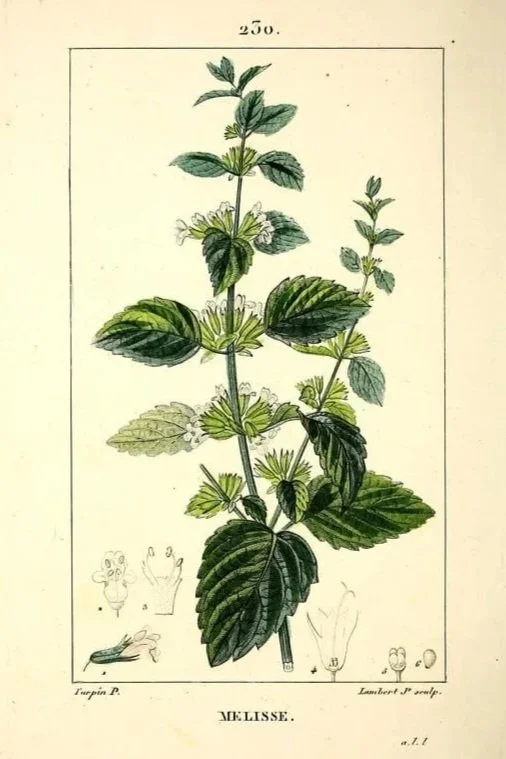
Lemon Balm (Melissa officinalis) is a gentle, soothing plant loved by adults & children alike. Lemon Balm is uplifting and eases stress & anxiety. So, it can be used in the daytime without making you fall asleep, but also in the evening to help you unwind. It also calms a nervous tummy. One study has shown it to help with ADHD symptoms (when combined with Valerian root). Great as a tincture, tea (especially combined with chamomile, tulsi, and rose), elixir, honey.
Both Passionflower (Passiflora incarnata) and Skullcap (Scutellaria lateriflora)are helpful for both daytime and nighttime anxiety, particularly the kind that causes circular or potentially catastrophic thought patterns. These nervines were two of the herbs that I first turned to when I got into herbalism & needed help with anxiety. Passionflower can help with nervous flutters of the heart, while Skullcap with its bitter properties can ease digestive upset.
Skullcap can also relieve tension headaches, and both ease muscular tension and gently move our physical bodies into a more relaxed state. Skullcap doubles as a restorative nervine, helping to rebuild and strengthen the nervous system over time. Best as tinctures, or small amount in teas, since both are quite bitter
Blue Vervain (Verbena hastata) is said to be best for those who tend to be hypervigilant and keep a tight reign on themselves and their surroundings (aka “control freaks”). This can sometimes be due to a trauma response that leads to an inability to truly rest and let go (or sometimes can be a trait we’re born with!). Blue Vervain also has a particular affinity for easing neck and shoulder tension, as well as headaches, and their bitter flavor can also support digestion. Best as tincture or a small amount in teas due to strong bitter flavor.
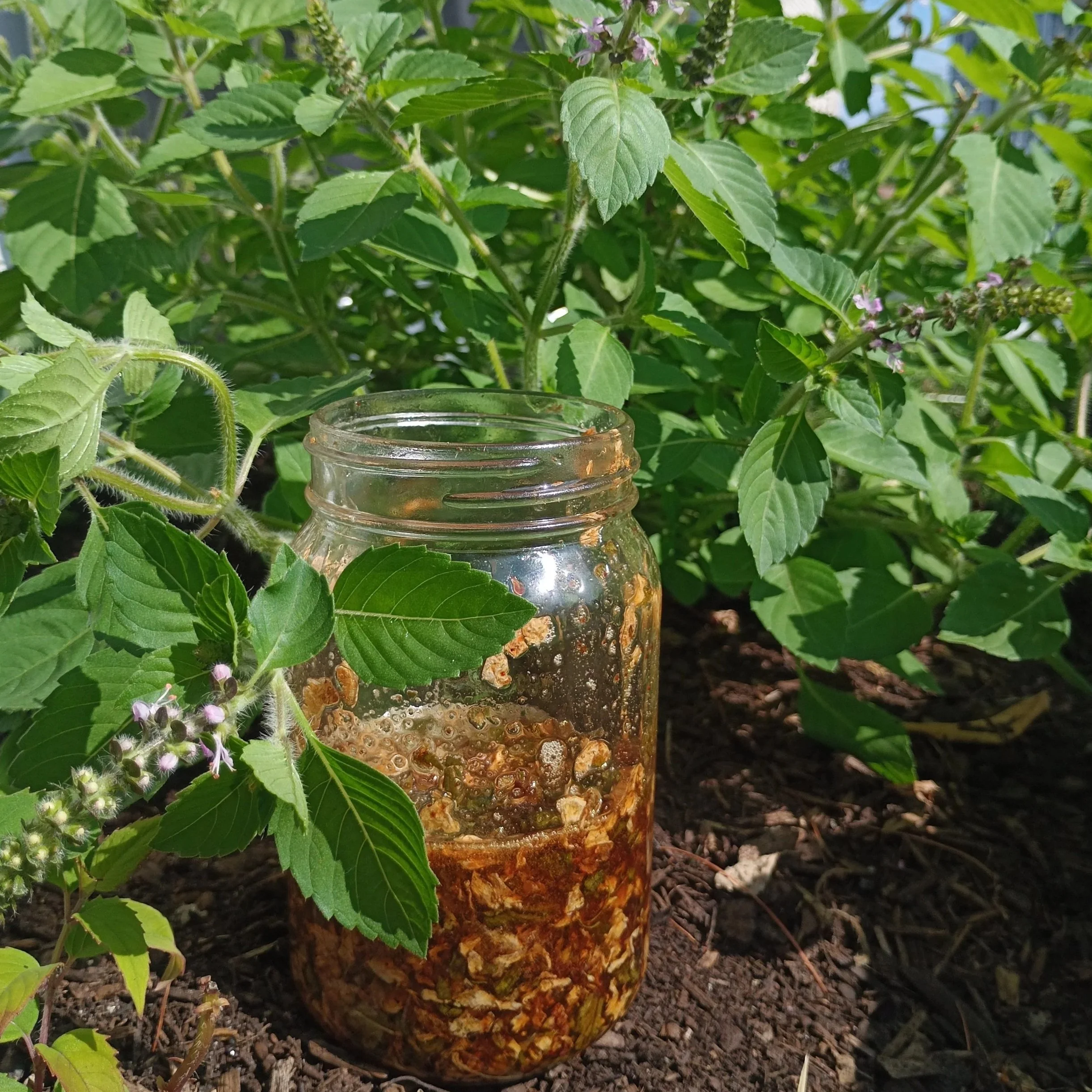
Tulsi (Ocimum africanum, sp.), also known as Holy Basil or Queen of Herbs, is a delicious, aromatic plant that is both uplifting and calming, making it wonderful for daytime use. This nervine falls under the categories of both relaxant and restorative. It is known as an adaptogen, meaning it supports the body to better respond to stress/fight-or-flight with continued use. It’s beautiful aroma and taste, along with its respiratory-supportive qualities, add to Tulsi’s ability to help us breathe more deeply and let go.
(Tulsi, Rose, & Lemon Balm Honey in my little Tulsi garden)
Plants are not “one-size-fits-all.” While the majority of these plants are gentle enough for a wide variety of folks, I encourage you to start with one or two that may be calling to you; a simple cup of tea or a small dose of a tincture to see how it feels in your body. Do you notice any shifts? Are you breathing more slowly or deeply? Did you shoulders lower a bit?
Nervines have much to teach us, particularly how to move a little slower and to come back home to our earthly bodies with more ease.
(p.s. I am not a medical doctor and none of these suggestions are meant to take the place of necessary medical treatment.)